skip to main content

Home

Retinal Vasculopathy with Cerebral Leukoencefalopathy and Systemic manifestations (RVCL-S) is a rare, hereditary disorder. Through this website we hope to inform patients, family members, caregivers and professionals about RVCL-S. You can also find the latest new about RVCL-S research done by the LUMC team on this website.

Read more

Recent news

  • Promotie Irene de Boer

    Op 12 juni 2025 verdedigde Irene de Boer haar proefschrift ‘Unraveling the genetic architecture of migraine: exploring the vascular components’ in het academiegebouw van de Universiteit Leiden. In het bijzijn van haar promotoren Prof. dr. G.M. Terwindt en prof. dr. A.M.J.M van den Maagdenberg en co-promotor dr. I.C. Notting beantwoordde Irene de kritische vragen van haar oppossitiecommissie. Een trotse groep familie, vrienden en collega’s waren hier bij aanwezig.

    Wat was het doel van het promotieonderzoek?

    Het onderzoek bestond in grote lijnen uit drie onderdelen: Genen en migraine, zeldzame vasculaire migrainesyndromen, ongelijkheid en intimidatie. Het volledige proefschrift is hier te lezen: Unraveling the genetic architecture of migraine | Scholarly Publications

      Onderzoek naar RVCL-S:

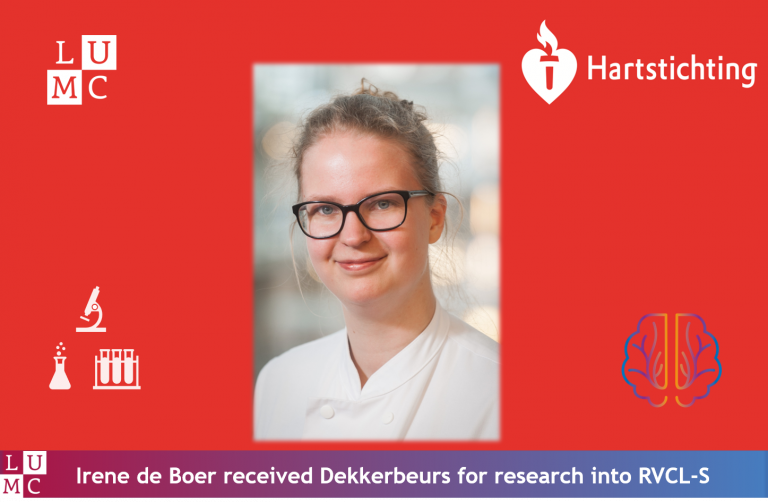
      Irene de Boer onderzocht voor haar proefschrift meerdere aspecten van RVCL-S van het werkingsmechanisme tot aan mogelijke biomarkers.

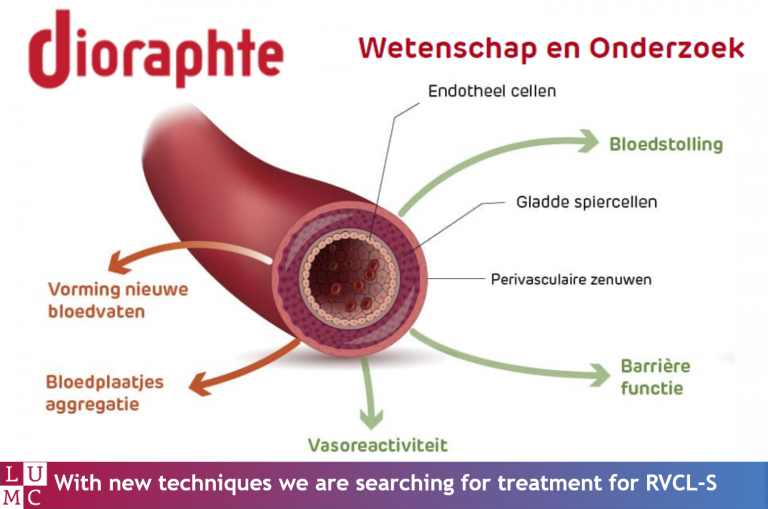
      Zo vond ze dat endotheel (de binnenbekleding van een bloedvat) minder goed lijkt te functioneren in RVCL-S, terwijl dit in CADASIL juist te maken lijkt te hebben met de gladde spiercellen van een bloedvat. Daarnaast onderzocht zij oogheelkundige markers voor RVCL-S, specifiek het netvlies. Zo onderzocht ze onder andere de rol van een OCT (Optische Cohorentie Tomografie) en OCT-A (angiografie), niet invasieve methodes om structurele veranderingen in het netvlies te detecteren en om bloedvaten van het netvlies in kaart te brengen, voor RVCL-S. Een belangrijke vondst was dat er al voor dat er visuele symptomen ontstaan bij patiënten veranderingen kunnen worden bemerkt in het netvlies. Daarom adviseren wij RVCL-S patiënten om al vanaf een leeftijd van 35 jaar jaarlijks een oogheelkundige controle te laten doen nog voor zij klachten ontwikkelen. Het netvlies (retina) kan worden gezien als het venster naar de hersenen. Irene pleit er dan ook voor dat neurologen en oogartsen intensiever zouden moeten samenwerken, omdat oogartsen via het netvlies zicht heeft op de (gevolgen van) neurologische aandoeningen. In het LUMC werken wij al nauw samen met de oogheelkunde. Oogarts Irene Notting was dan ook co-promotor van Irene de Boer.

      Voor haar proefschrift keek Irene ook naar verschillen tussen cognitieve testen en MRI afwijkingen bij patiënten met RVCL-S en gezonde controles. Zij vond bijvoobeeld dat veel patiënten jonger dan 50 jaar geen cognitieve achteruitgang vertoonde, maar wel meer depressieve symptomen rapporteerden. Dit is dus iets wat wij ook in de klinische praktijk goed monitoren.

      We zijn enorm trots op Irene die zich nu Dr. de Boer mag noemen. Naast haar opleiding klinische genetica zal zij onderzoek blijven doen in onze onderzoeksgroep als Post-Doc en zal ze haar mooie onderzoek voortzetten. Zo is zij betrokken bij de FORT studie en begeleid zij arts-onderzoekers Annelise Wilms en Estelle van Eijk gedurende hun promotie onderzoek.

    1. The first international RVCL-S meeting was a great success!

      An insight into the various aspects of RVCL-S research worldwide during the first international RVCL-S meeting; from fruitfly models to clinical studies, and from MRI to functional ultrasound; an example of important translational research toward a better understanding of the disease.🧐

      Last month, we hosted the first international RVCL-S meeting in Leiden, bringing together researchers from across the globe to discuss this rare hereditary disease. The event, held at the Hortus botanicus Leiden , centered on translational research. In the morning, discussions focused on the pathophysiology and potential therapeutic targets, while the afternoon highlighted clinical studies.

      We were honored to hear from leading researchers such as Dr. Chantal Alkhoury (France), who discussed her cellular research, Dr. Elena Gracheva (Washington), who presented on fruitfly models (Drosophila), Prof. David Hunt (UK), who talked about DNA damage and the use of the UK biobank, and Dr. Marcel Woo (Germany), who highlighted the role of type 2 interferon.
      Two pre-clinical researchers from Leiden also presented; Chelsey Linnenbank shared insights on her mouse models and the use of functional ultrasound for brain imaging, while Vasiliki Gkouzioti discussed human induced pluripotent stem cells for RVCL-S research

      After a lovely lunch and a brief walk through the beautiful gardens of the Hortus, led by Else Tolner Prof. Mickaël Tanter (France), gave a lecture on the developments in functional ultrasound for brain imaging. He explained the potential role for pre-clinical and clinical research.

      During the clinical part of the day; Dr. Dominique Hervé (France) shared a clinical case and Dr. Andria Ford (Washington) presented about brain MRI findings in RVCL-S patients as a promising biomarker. Most researchers are looking for the potential biomarker which can bring us closer to a treatment for this invalidating disease. Irene de Boer from Leiden told us about the importance of these biomarkers and which (combinations of) biomarkers might be interesting. Annelise Wilms closed the day with a talk about our natural history study (FORT) and the goal of this study.

      The day concluded with engaging discussions and plans for future collaborations. Overall, it was an insightful day where we learned a lot from each other. Not only were the major successes shared, but also the challenges of studying such a rare disease were openly discussed. This was a significant step towards accelerating research and hopefully the first of many inspirational international meetings!

      For more information about our research, see our website RVCL-S Research and follow our LinkedIn page (1) RVCLS Research Leiden: overzicht | LinkedIn

      Groups picture of the researchers joining the international meeting.
    2. Retinal oxygen saturation in RVCL-S

      Drs. de Boer gave a presentation on oxygen saturation of the retinal blood vessels at the 10th congress of the European Academy of Neurology (EAN). Her research shows that the oxygen saturation of RVCL-S patients is higher in the veins of the retina compared to healthy controls. The difference in oxygen saturation between arteries and veins was smaller in RVCL-S patients. This teaches us more about how retinopathy in RVCL-S can develop.

    3. NFL and GFAP in RVCL-S

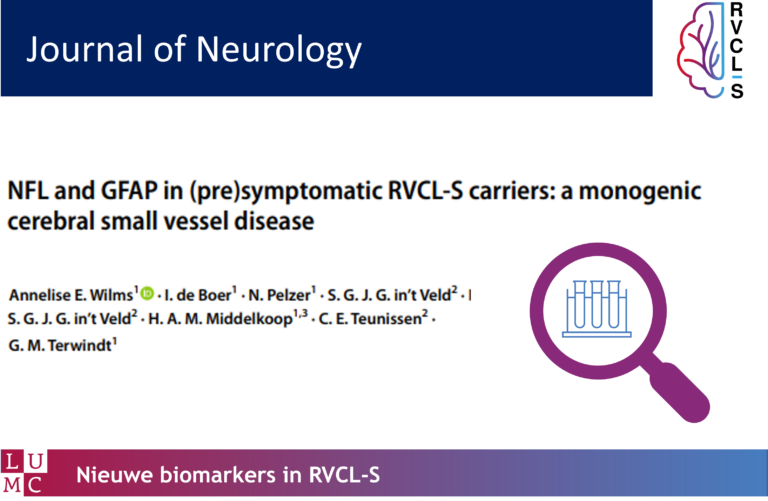
      Researchers from the LUMC and Amsterdam UMC have published a new article about the biomarkers NFL and GFAP in RVCL-S. They measured the levels of these biomarkers in blood and cerebrospinal fluid and compared them with healthy controls. They found increased NFL values in (pre-)symptomatic RVCL-S patients. They also found an association between NFL and GFAP levels and the patients’ cognitive function. You can read the full article here.

    4. RVCL-S patient meeting

      In January the Leiden University Medical Center (LUMC) has organized three online RVCL-S patient meetings. The evenings were a great success! There were several short presentations about the RVCL-S research. There was also an opportunity for patients and family members to ask questions to the doctors and researchers of the LUMC. A short summary of what was discussed during the patient evenings can be found here (Dutch only).

    5. Eye abnormalities on OCTA scans in RVCL-S

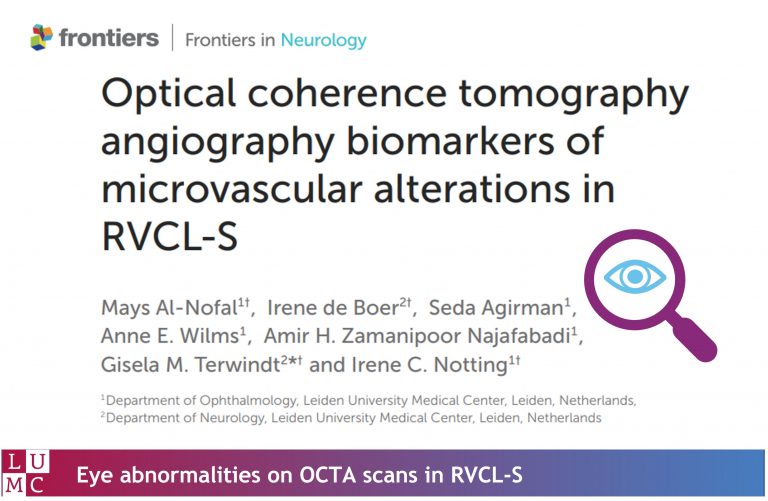
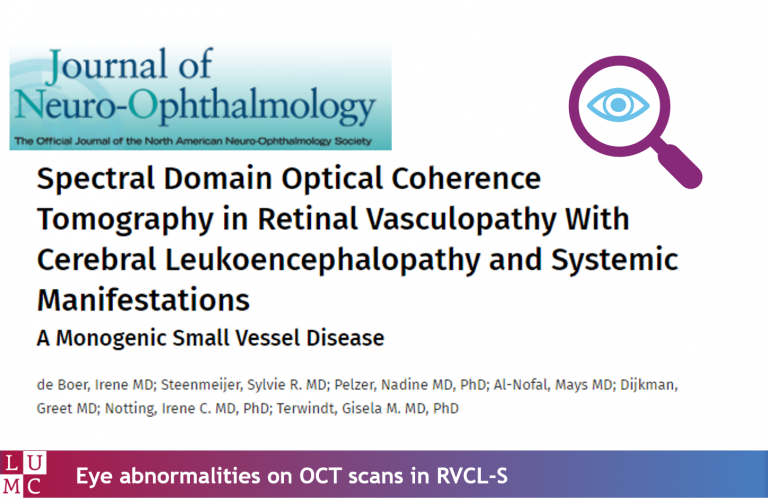
      Researchers at the LUMC have recently published about abnormalities in the eyes of RVCL-S patients. With OCTA (Optical Coherence Tomography Angiography) scans they evaluated the blood vessels of the retina. They found that their were less blood vessels present in RVCL-S patients compared to healthy controls. Click here for more information!

    6. European Stroke Congress

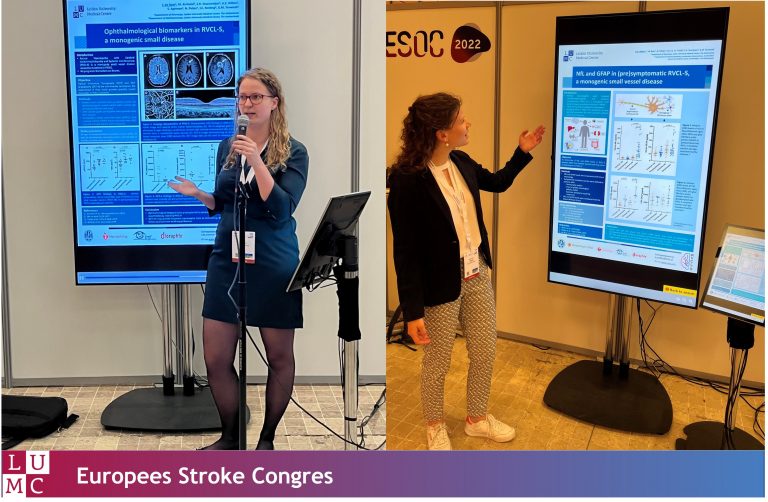
      Researchers of the LUMC have visited the European Stroke Congress (ESOC) in Lyon. They gave a short presentation about their work on RVCL-S. By visiting international congresses they try to increase the awareness of RVCL-S worldwide.

    7. Support our research!

      Donate to support RVCL-S research in the LUMC. All help is appreciated and will go towards understanding RVCL-S and finding a treatment. Even small amounts can contribute towards (partially) funding our projects. Moreover, donations are often tax deductible. For more information click here.

    8. Review about RVCL-S

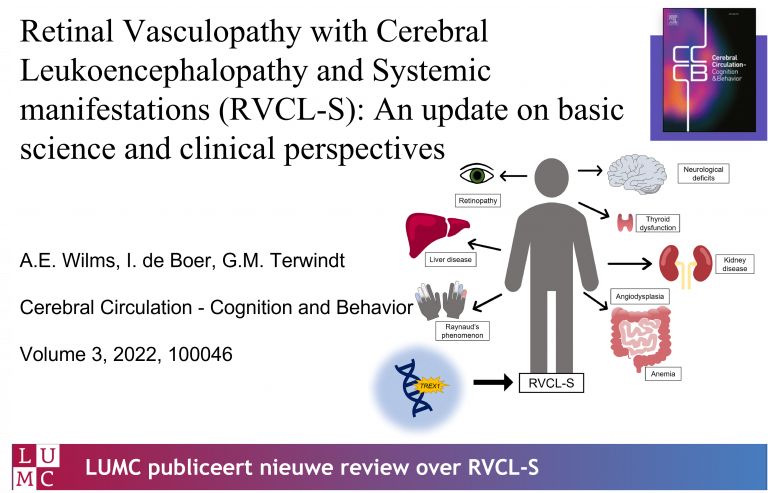
      Physicians of the LUMC have published a new review about RVCL-S. They describe the key features of the disorder and the most common complications that can occur. The latest scientific insights abour RVCL-S are also being discussed. The review is published in the scientific paper Cerebral Circulation Cognition and Behaviour. You can read the full review here.

    9. New website

      As of today, the new RVCL-S website of the LUMC is live! Information for patients, their relatives and care providers is bundled on this website. You can also find the latest news about the research into RVCL-S here.

    More news